Customer Service Isometric Illustration: Your 24/7 Visual Solution
There’s a specific kind of visual fatigue that sets in when you see the same flat, generic stock photos on every SaaS landing page. We’ve all seen the "support agent with headset" stock image a thousand times. It feels impersonal. In the current digital landscape, where trust is the currency of conversion, brands need visuals that convey reliability and warmth without looking like a template. This is exactly where the Customer Service Isometric Illustration concept steps in. It’s not just a collection of file formats; it’s a narrative tool designed to humanize your digital presence.
Isometric design has a unique power. It creates a pseudo-3D world that feels tangible and organized, yet it retains the scalability and cleanliness of vector art. When you apply this to the theme of "Customer Service 24/7," you get a visual language that says, "We are always here, and we are structurally sound." It bridges the gap between abstract functionality and human connection.
The Anatomy of the Isometric Style
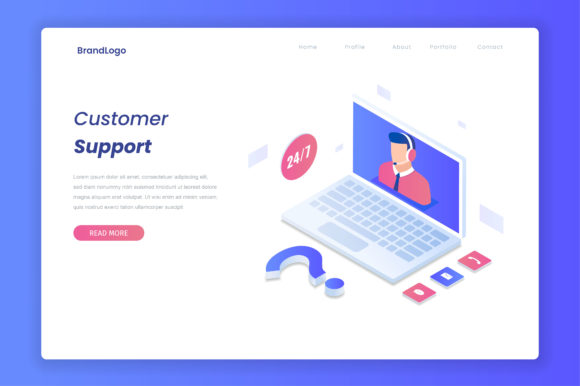
To understand the value of this asset, you have to look at its visual personality. Unlike the chaotic, hand-drawn sketches of the past, isometric illustration relies on geometry. The lines are clean, the perspectives are mathematically consistent, and the composition usually feels balanced. This particular concept focuses on the interaction between the user and the support system. You’ll likely see characters engaged with devices, chat bubbles floating in the air, or abstract representations of time (like clocks or globe icons) to signify that 24/7 availability.
The appeal here is professionalism meets approachability. It avoids the stiffness of corporate photography. Instead, it uses color theory and shape language to guide the eye. For a designer or a small business owner, this style acts as a premium font does in typography—it elevates the entire composition. It tells the viewer that you care about the details of your brand identity. The "personality" is modern, tech-savvy, and trustworthy. It fits perfectly into the ecosystem of modern web design where minimalism meets functionality.
Strategic Placement: Where This Asset Shines
A common mistake in editorial design and digital marketing is using illustrations without considering the context. However, the versatility of a file package that includes AI, EPS, JPEG, PNG, and SVG formats cannot be overstated. This isn't just for a website header; it's a multi-channel asset.
Consider your landing pages. If you are a SaaS company or a service provider, placing a Customer Service 24/7 isometric illustration next to your pricing table or support section can significantly reduce user anxiety. It visually answers the question, "Will I be taken care of?" before the user even reads the text. It works as a visual anchor, improving the visual hierarchy of the page.
Beyond the screen, think about mobile applications. Onboarding screens often suffer from too much text. A compact isometric scene can explain a complex feature—like live chat or ticket tracking—in a split second. It’s also invaluable for packaging design. If you sell physical tech products or subscription boxes, printing these illustrations on the inner flaps or instruction manuals adds a layer of delight and cohesion to the unboxing experience.
For marketers and content creators, the utility extends to social media graphics. Instagram carousels and Pinterest pins thrive on distinct visuals. Using this style creates a recognizable "world" for your brand. It’s much more effective than overlaying text on a blurry photo. It’s a creative font for the eyes—consistent, recognizable, and scalable.
Practical Integration and Design Strategy
Simply owning the files isn't enough; you need to integrate them effectively. As an experienced designer, I can tell you that the success of an illustration relies heavily on its environment. Here is how to maximize the impact of this asset:
- Color Harmony: Before you drop the illustration into your project, ensure the color palette matches your brand identity. Since you have the vector files (AI/EPS/SVG), you can easily swap out the accent colors to match your primary and secondary brand hues. This ensures the illustration looks bespoke, not bought.
- Font Pairing: Visuals and typography are dance partners. Because isometric art is geometric and structured, it pairs beautifully with a clean sans serif font for body text. The geometric nature of the illustration creates a rhythm that complements the neutrality of sans-serif typefaces. If you want to add a human touch, use a handwritten font or script font sparingly for call-to-action buttons, mimicking the "chat bubble" aesthetic often found in these illustrations.
- Negative Space: Isometric scenes can be dense. Ensure you leave enough "breathing room" (negative space) around the illustration. This prevents your layout from looking cluttered and helps maintain the readability of surrounding text.
Evaluating Fit for Your Project
How do you know if this is the right move for your project? It comes down to tone. If your brand is ultra-serious, high-corporate, or strictly luxury (like fine jewelry or high finance), the playful nature of isometric illustration might clash with your display font and overall aesthetic. However, for the vast majority of modern businesses—from startups to education platforms—this style hits the sweet spot.
It is particularly effective for B2B companies. In the B2B space, you are often selling abstract concepts like "uptime" or "support." You can't photograph "uptime." But you can illustrate it. This asset helps visualize the invisible, making abstract service promises feel concrete.
The Technical Edge: Formats and Flexibility
The file inclusion list—AI, EPS, JPEG, PNG, SVG—is the industry standard for a reason. It offers total flexibility.
- SVG (Scalable Vector Graphics): This is crucial for web design. SVGs are lightweight and scale infinitely without pixelation, ensuring your site speed remains fast while looking crisp on 4K monitors and Retina screens.
- AI/EPS: These are your master files. Use them in Adobe Illustrator to deconstruct the scene. Maybe you only want the headset from the character, or you want to rearrange the elements to fit a wide banner format. This is where you customize the design assets.
- PNG/JPEG: Essential for quick drops into presentations, blog posts (like this one), or video editing timelines.
Conclusion: Elevating the Mundane
Customer support is a mundane necessity for most businesses, but it doesn't have to look that way. By utilizing a Customer Service Isometric Illustration, you transform a standard service offering into a visual story. It signals to your audience that you are modern, organized, and ready to help. Whether you are a blogger looking to spice up a tutorial, a small business owner launching a new app, or a designer building a landing page, this visual style offers a timeless solution to the problem of digital coldness. It’s not just decoration; it’s a strategic tool for building trust.